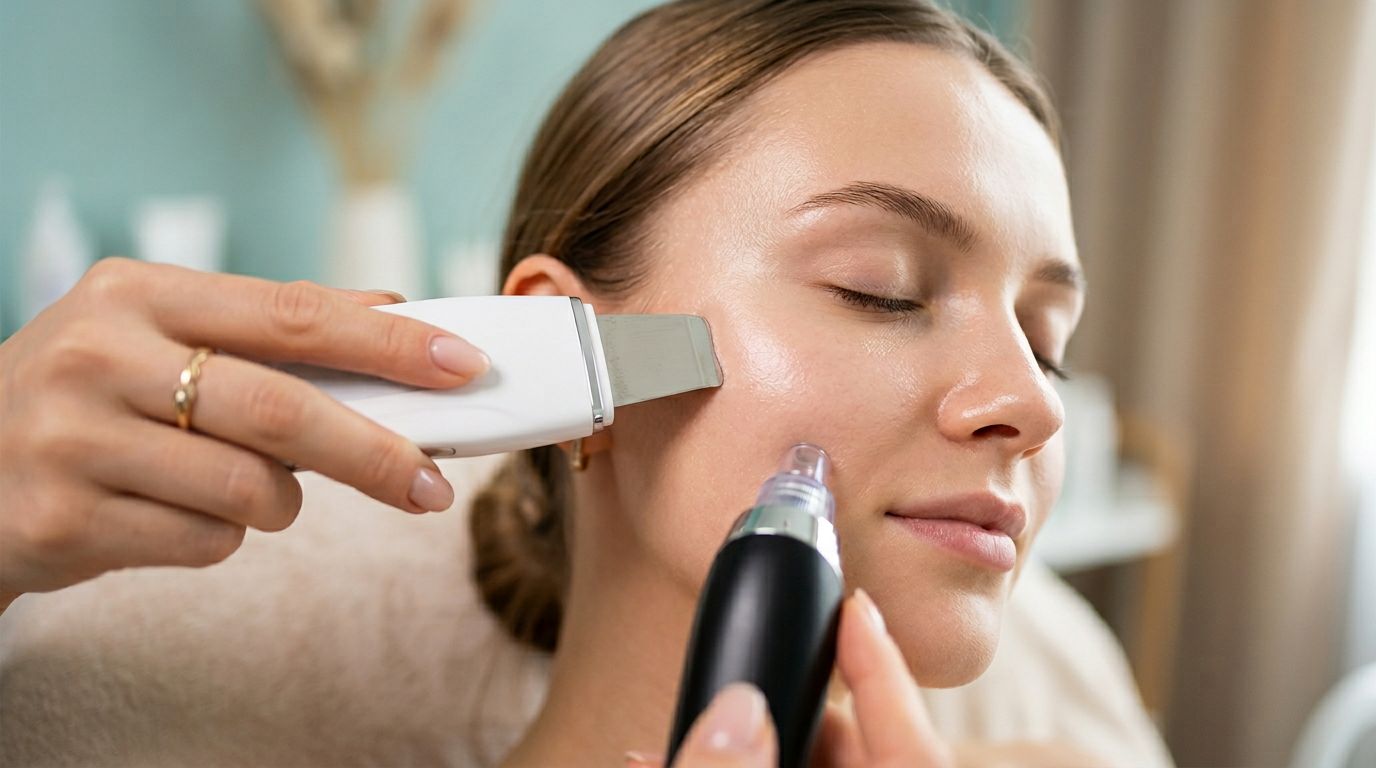
If you’re stuck between an ultrasonic scrubber and a pore vacuum, the best pick is usually the gentler one you can use correctly. For most beginners, a skin scrubber is easier to control and less likely to leave marks. A blackhead vacuum can help stubborn congestion, but only when used lightly and on the right areas.
That short answer matters because skin scrubber vs blackhead vacuum isn’t just a shopping choice. It’s a skin barrier choice. Both tools can make pores look cleaner for a while, yet neither permanently shrinks pores, and both can irritate skin if you overdo them.
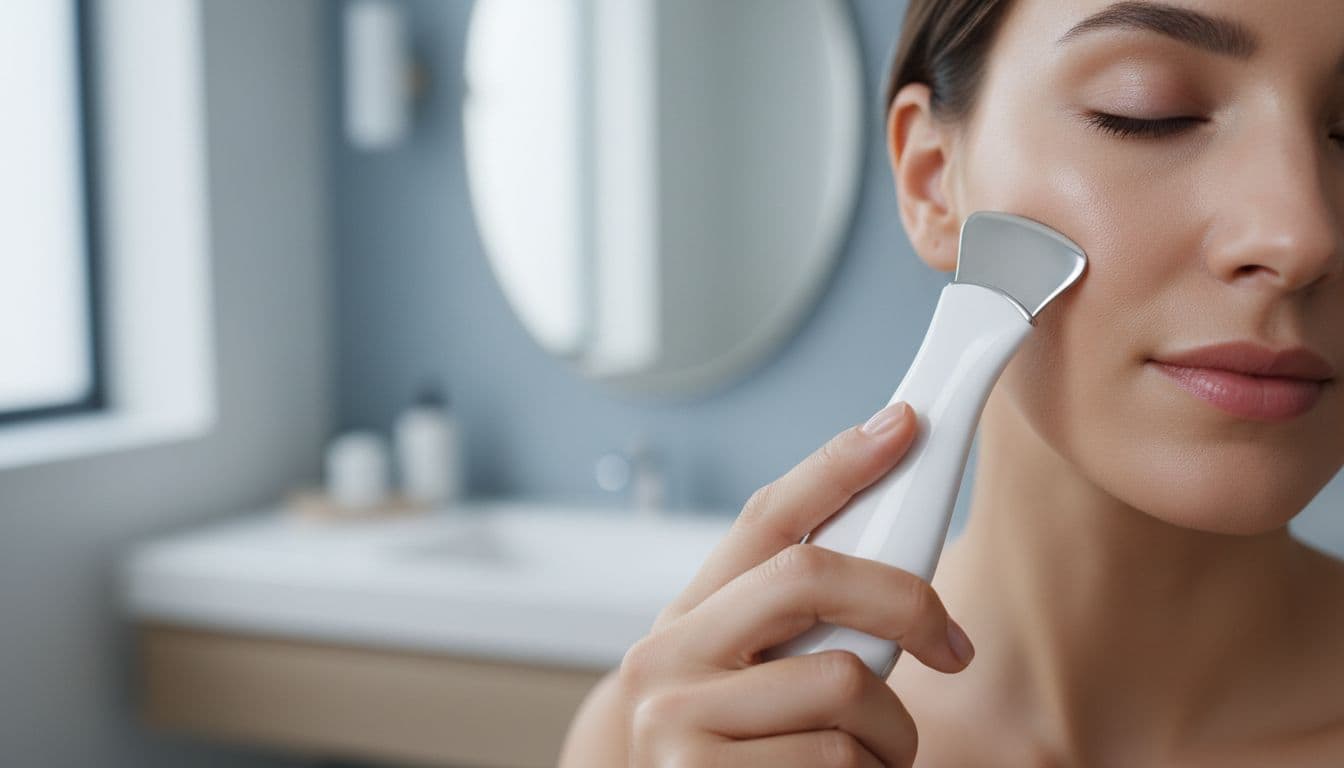
An ultrasonic skin scrubber uses a flat metal spatula that vibrates at high speed. On damp skin, those vibrations help loosen surface oil, dead skin, and soft debris. Think of it like a tiny windshield wiper for buildup, not a drill for deep plugs.
Because it glides across the skin, the effect is usually more even and less aggressive than suction. Many people use it on the nose, chin, and forehead, but it can also work across the whole face if the pressure stays light.
Still, “gentle” doesn’t mean risk-free. If you scrape too hard, use it on dry skin, or pair it with strong acids, you can end up red and tight. Results also vary. Soft congestion may lift well, while deep, stubborn blackheads may barely budge.
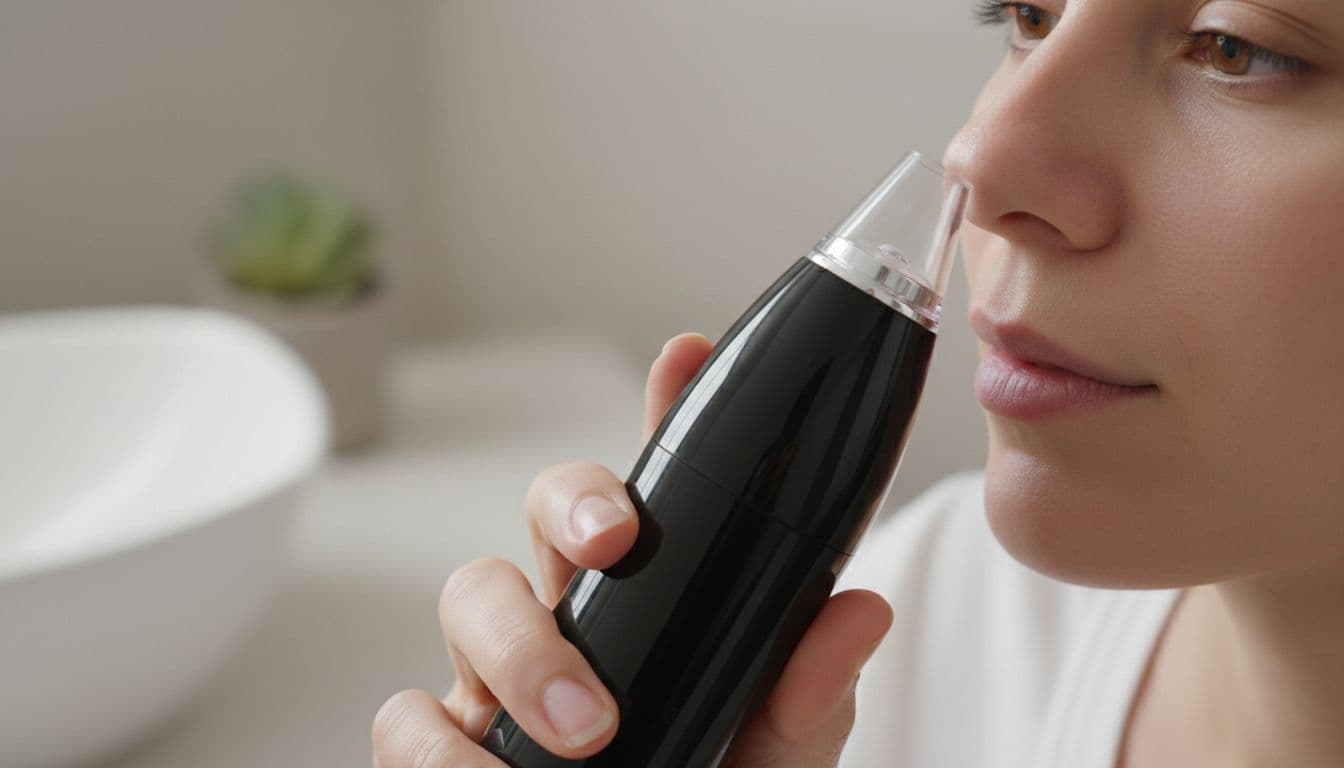
A blackhead vacuum uses suction to pull at oil and debris inside the pore opening. It tends to target small areas, especially the nose. That sounds appealing, and sometimes it works, but the method is less forgiving.
Strong suction can leave bruising, burst capillaries, or a ring of redness. That’s why technique matters more here. You need clean skin, low suction, short passes, and constant movement. Holding the tip in one spot is where trouble starts.
In short, scrubbers usually suit maintenance and mild congestion. Vacuums may help with compact buildup in oily zones, but they carry a higher irritation risk.
The clearest difference is how they treat the skin while chasing the clog.
| Feature | Ultrasonic skin scrubber | Blackhead vacuum |
|---|---|---|
| Main action | Vibrates and lifts surface debris | Uses suction to pull from pore opening |
| Best use | Mild congestion, rough texture, oily T-zone | Stubborn nose or chin buildup, spot use |
| Risk level | Lower, if used on damp skin with light pressure | Higher, if suction is too strong or held still |
| Results | Usually subtle and more even | Can be more visible, but less predictable |
That comparison points to a simple truth. A visible result isn’t always a better result. If your skin looks raw afterward, the tool did too much.
Pores can look smaller after cleaning because they contain less oil and debris. They don’t permanently shrink. Pore size is mostly tied to genetics, oil output, age, and skin support over time.
If a tool leaves lasting redness, broken capillaries, or a stinging barrier, it wasn’t helping your pores anymore.
Also, neither device treats the cause of acne. They may reduce the look of congestion for a short time, yet they won’t replace a steady routine with cleanser, moisturizer, sunscreen, and acne care when needed. Overuse is the common mistake. Once a week is plenty for many people, and some skin types need even less.
If your skin gets reactive fast, start with caution. Sensitive skin usually does better with a low-setting skin scrubber, used briefly on very damp skin. Suction is more likely to leave marks, especially around the nose and cheeks.
Acne-prone skin needs the most restraint. Neither tool should go over angry pimples, cysts, or broken skin. A scrubber may be the safer option around clogged areas, but even that can irritate if you’re using retinoids, benzoyl peroxide, or exfoliating acids.
For oily skin, either tool can help, depending on the pattern. A scrubber works well for overall buildup and roughness. A vacuum can make sense for short, occasional use on the nose, where blackheads often sit tighter.
If you’re congestion-prone, especially with combination skin, the scrubber usually wins as an all-around tool. It covers more area and feels easier to control. Vacuum use is more of a spot treatment, not a whole-face habit.
Results vary with skin type, the kind of clog, and your technique. Sebaceous filaments, which are normal and common on the nose, often come back quickly no matter which tool you use.
When shopping, skip gimmicks and look for control. For a scrubber, a smooth metal blade, waterproof body, and clear settings matter most. For a vacuum, choose adjustable suction and a low starting level. More power isn’t better for beginners.
Use either tool on freshly cleansed skin. A scrubber works best when the skin stays wet, so use water or a simple hydrating mist. A vacuum works better after a warm shower or warm compress, because softened oil moves more easily. Keep the tip moving, limit passes, and stop if the skin turns hot or blotchy.
Afterward, apply a plain moisturizer. Then skip acids, retinoids, scrubs, and strong masks for the rest of the day. Clean the device after every use, because a pore tool shouldn’t push yesterday’s oil back onto today’s skin.
For most people choosing skin scrubber vs blackhead vacuum, the scrubber is the safer first buy. It’s usually gentler, easier to learn, and better for regular upkeep. A blackhead vacuum can help stubborn nose congestion, but only with light suction and careful technique. If your skin gets red easily, protect the barrier first, because calmer skin almost always looks clearer.









Leave a comment